Conversion Kilograms to Pounds
The conversion kilograms to pounds is one of the most useful weight conversions, and the answer is simple: 1 kilogram equals 2.20462 pounds, so multiply the number of kilograms by 2.20462. That means 10 kilograms is 22.05 pounds, 5 kilograms is 11.02 pounds, and 1 kilogram is 2.20 pounds. The reverse of the conversion kilograms to pounds is also simple: 1 pound equals 0.453592 kilograms, so multiply the pound value by 0.453592 or divide it by 2.20462. This guide explains the conversion kilograms to pounds step by step, with a free calculator that shows its working, the exact formula, a reference table, practical examples from everyday life, and answers to the questions people ask most. Whether you are checking body weight, packing luggage, or weighing a parcel, the conversion kilograms to pounds is one you can do in seconds and trust.
Conversion Kilograms to Pounds Calculator
22.05 lbs
Step 1: take 10 kg. Step 2: multiply by 2.20462. Step 3: 10 × 2.20462 = 22.05 lbs.
Formula: lbs = kg × 2.20462
How to Do the Conversion Kilograms to Pounds Step by Step
The conversion kilograms to pounds needs only one multiplication. Follow the three steps below once, and the method will feel natural every time you use it.
- Write down the weight in kilograms. Take the number from the scale, the label, or the booking confirmation, and write it down so you do not mix it up with another figure.
- Multiply by 2.20462. Multiply the kilogram value by the exact conversion factor, 2.20462. This single step is the whole conversion.
- Round the answer to two decimal places. For everyday use, two decimal places are enough. For example, 48.5016 pounds becomes 48.50 pounds.
Worked calculation: 6 kilograms. Step 1: take 6 kg. Step 2: multiply by 2.20462. Step 3: 6 × 2.20462 = 13.2277, which rounds to 13.23 pounds. A 6 kilogram kettlebell is therefore just over 13 pounds.
Worked calculation: 22 kilograms. Step 1: take 22 kg. Step 2: multiply by 2.20462. Step 3: 22 × 2.20462 = 48.5016, which rounds to 48.50 pounds. A 22 kilogram suitcase is therefore just under 49 pounds.
Worked calculation: 65 kilograms. Step 1: take 65 kg. Step 2: multiply by 2.20462. Step 3: 65 × 2.20462 = 143.3003, which rounds to 143.30 pounds. A 65 kilogram person therefore weighs about 143 pounds.
If you only need a rough figure in your head, multiply by 2.2 instead. It is close enough for a quick estimate: 10 kilograms is roughly 22 pounds, and 50 kilograms is roughly 110 pounds. For luggage limits, postage, or anything where a small error could cost money, always use the exact factor of 2.20462 and the calculator above.
The Formula for the Conversion Kilograms to Pounds
The formula for the conversion kilograms to pounds is:
pounds = kilograms × 2.20462
The number 2.20462 is the exact conversion factor. One kilogram is defined as 2.20462 pounds, because the international pound is defined as exactly 0.45359237 kilograms, and 1 divided by 0.45359237 is 2.20462262, which rounds to 2.20462. Using the full factor keeps your answer accurate to two decimal places for every weight you are likely to convert.
The reverse formula is kilograms = pounds × 0.453592. For example, 40 pounds × 0.453592 = 18.1437 kilograms, which rounds to 18.14 kg, and 60 pounds × 0.453592 = 27.2155 kilograms, which rounds to 27.22 kg. If you remember only one direction, remember that kilograms are the smaller number: the same weight is always a bigger number in pounds than in kilograms, because a pound is lighter than a kilogram.
For most purposes, give the answer to two decimal places. If you are tracking body weight, one decimal place is often enough, for example 76 kilograms is 167.6 pounds. If you are working out a postage cost or a luggage allowance, keep two decimal places so you do not accidentally go over a limit.
Conversion Kilograms to Pounds Table
Use this table for the values people look up most often. Every figure uses the exact factor of 2.20462 and is rounded to two decimal places.
| Kilograms (kg) | Pounds (lbs) |
|---|---|
| 1 kg | 2.20 lbs |
| 2 kg | 4.41 lbs |
| 3 kg | 6.61 lbs |
| 5 kg | 11.02 lbs |
| 10 kg | 22.05 lbs |
| 20 kg | 44.09 lbs |
| 25 kg | 55.12 lbs |
| 40 kg | 88.18 lbs |
| 50 kg | 110.23 lbs |
| 75 kg | 165.35 lbs |
| 90 kg | 198.42 lbs |
| 100 kg | 220.46 lbs |
For values between these rows, multiply by 2.20462 or use the calculator at the top of this page. For example, 8 kilograms is 8 × 2.20462 = 17.64 pounds, and 70 kilograms is 70 × 2.20462 = 154.32 pounds.
Practical Examples: Conversion Kilograms to Pounds in Real Life
People use the conversion kilograms to pounds in all kinds of everyday situations. The United Kingdom uses kilograms on scales and labels, while the United States uses pounds, so the conversion comes up whenever the two systems meet.
Body weight. A person who weighs 76 kilograms weighs 76 × 2.20462 = 167.55 pounds, which is 11 st 13.55 lb. Someone who weighs 58 kilograms is 58 × 2.20462 = 127.87 pounds. If your bathroom scale shows kilograms and a fitness app asks for pounds, this is the conversion to use, and it is worth doing with the exact factor rather than guessing.
Luggage and travel. Many airlines allow 23 kilograms of checked luggage. That is 23 × 2.20462 = 50.71 pounds. If your airline states its limit as 50 lb, you now know that 23 kilograms is slightly over it, so you should pack a little lighter or check the exact allowance before you travel.
Gym weights. A 35 kilogram barbell is 77.16 pounds, and a 10 kilogram dumbbell is 22.05 pounds. Knowing these figures helps when you follow a training plan written in pounds or when you use equipment labelled in kilograms at a gym abroad.
Cooking and shopping. A 2.2 kilogram chicken is 4.85 pounds, and a 3 kilogram bag of potatoes is 6.61 pounds. Recipes from the United States often give weights in pounds, so converting the weight on the packet saves you from buying too much or too little.
Parcels and postage. A parcel weighing 13 kilograms is 28.66 pounds. Couriers sometimes price by the pound, and a parcel that is close to a weight band can cost more if you round the wrong way, so convert first and then check the price.
Pets. A dog that weighs 7 kilograms is 15.43 pounds, and a cat at 4 kilograms is 8.82 pounds. Vets in the United Kingdom record weight in kilograms, but pet food and medication guidance from the United States is often given in pounds.
Common Mistakes to Avoid With the Conversion Kilograms to Pounds
Dividing instead of multiplying. The most common error is dividing kilograms by 2.20462 instead of multiplying. That gives a much smaller number: 10 kilograms divided by 2.20462 is 4.54, which is the weight in kilograms of 10 pounds, not the weight in pounds of 10 kilograms. Always multiply kilograms to get pounds.
Using 2.2 for precise work. The rounded factor 2.2 is fine for a rough estimate, but it is not exact. For 100 kilograms, 2.2 gives 220 pounds while the exact answer is 220.46 pounds. That half-pound difference matters for luggage and postage, so use 2.20462 when accuracy matters.
Confusing pounds and ounces. Pounds and ounces are different units: 1 pound equals 16 ounces. A result of 22.05 pounds is not 22 pounds 5 ounces; it is 22 pounds plus 0.05 pounds, which is 0.8 ounces. Keep the decimal in pounds unless you deliberately convert the remainder into ounces.
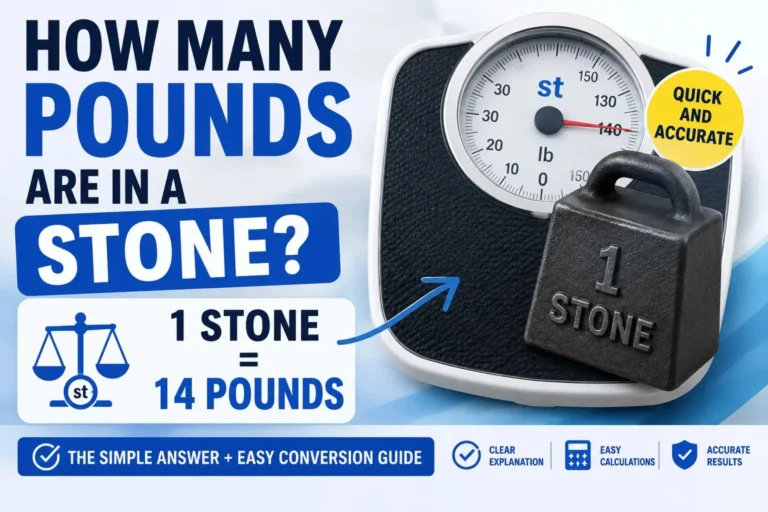
Mixing up stones and pounds. In the UK, body weight is often given in stones and pounds, for example 11 st 13 lb. That is not the same as 11.13 pounds. One stone is 14 pounds, so convert kilograms to pounds first and then divide by 14 if you need stones.
Rounding too early. Round only the final answer. If you round the factor to 2.2 and then round the answer again, the error grows. Multiply by 2.20462 first, then round the result to two decimal places.
Reading grams as kilograms. A value of 500 grams is 0.5 kilograms, which is 1.10 pounds, not 500 pounds and not 5 pounds. Check whether the label says g or kg before you convert, because food and parcel labels often use grams.
Related Conversions
If you found this guide useful, these related conversions cover the other units you are likely to need. Start on the homepage for the full set of tools, or use the kg to pounds converter for a quick result. To see the same weight in stones, try the kg to stones converter, and to go back the other way use the stones to kg converter. Two related guides explain the same conversion in more detail: our kilograms in pounds guide and our kilo to pounds guide.
Frequently Asked Questions: Conversion Kilograms to Pounds
What is the conversion kilograms to pounds?
The conversion kilograms to pounds uses the factor 2.20462: multiply kilograms by 2.20462 to get pounds. For example, 10 kilograms × 2.20462 = 22.0462, which rounds to 22.05 pounds.
How do I do the conversion kilograms to pounds on a calculator?
Type the number of kilograms, press the multiply key, enter 2.20462, and press equals. For example, type 22, ×, 2.20462, = to get 48.5016, which rounds to 48.50 pounds. You can also use the calculator at the top of this page.
What is 10 kilograms in pounds?
10 kilograms is 22.05 pounds. Multiply 10 by 2.20462 to get 22.0462, then round to two decimal places.
What is 20 kilograms in pounds?
20 kilograms is 44.09 pounds. Multiply 20 by 2.20462 to get 44.0924, then round to two decimal places.
What is 50 kilograms in pounds?
50 kilograms is 110.23 pounds. Multiply 50 by 2.20462 to get 110.2310, then round to two decimal places.
How do I reverse the conversion kilograms to pounds?
Multiply the number of pounds by 0.453592. For example, 40 pounds × 0.453592 = 18.1437 kilograms, which rounds to 18.14 kg.
Should I use 2.20 or 2.20462?
Use 2.20462 whenever accuracy matters, such as luggage, postage, or medication. Use 2.2 only for a quick estimate in your head, because it can be out by about half a pound at 100 kilograms.
What is 1 kilogram in pounds?
1 kilogram is 2.20 pounds. Multiply 1 by 2.20462 to get 2.20462, which rounds to 2.20 pounds.