
Kilo V Pounds
Kilo v Pounds Calculator
Convert kilos to pounds, or pounds to kilos.
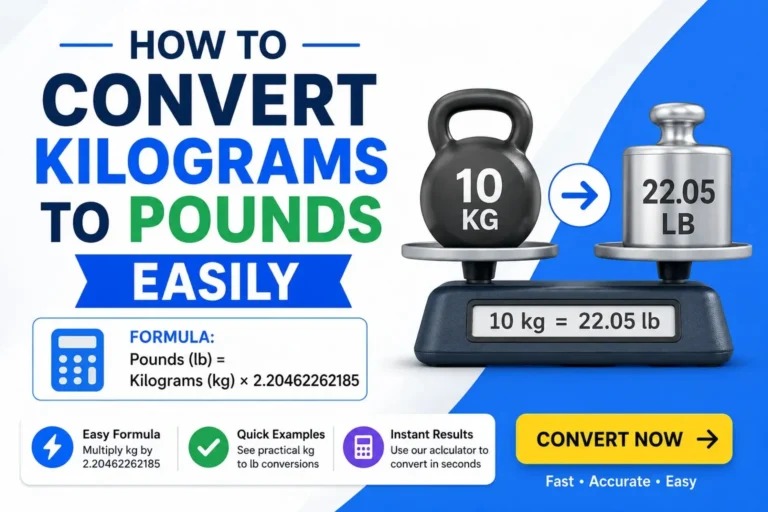
10 kg = 22.05 lb
10 lb = 4.54 kg
Kilo v pounds is a simple comparison: 1 kilogram equals 2.20462 pounds, and 1 pound equals 0.453592 kilograms. So a kilo is more than twice as heavy as a pound, and any weight in kilos is a bigger number in pounds. This guide explains both units, shows you how to convert kilo v pounds in both directions, and gives you a table, worked examples, and a free calculator.
Kilo v Pounds: The Quick Answer
When you put kilo v pounds side by side, the kilo is the bigger unit. The kilogram is the metric unit of mass, used in most of the world and defined by the International System of Units. The pound is the imperial unit, used in the United States and still seen in the United Kingdom for body weight and food. One kilogram is 2.20462 pounds, so a weight of 10 kg is 22.05 lb, while a weight of 10 lb is only 4.54 kg. The two numbers describe the same mass; only the unit changes.
How to Convert Kilo v Pounds in Both Directions
There are two directions, and each one has its own step.
- Kilos to pounds: multiply by 2.20462. For example, 10 kg x 2.20462 = 22.0462, which rounds to 22.05 lb.
- Pounds to kilos: multiply by 0.453592. For example, 10 lb x 0.453592 = 4.53592, which rounds to 4.54 kg.
- Check your answer. The pound number is always bigger than the kilo number for the same weight. If it is not, you have mixed up the directions.
Try a heavier weight in both directions. 50 kg x 2.20462 = 110.231, so 50 kg is 110.23 lb. Going back, 110.23 lb x 0.453592 = 50.00 kg, which checks out.
The Kilo v Pounds Formula and Conversion Factors
There are two formulas for kilo v pounds. To go from kilos to pounds: pounds = kilograms x 2.20462. To go from pounds to kilos: kilograms = pounds x 0.453592. The factors come from the international definition of the pound: 1 pound is exactly 0.45359237 kilograms, so 1 kilogram is 1 divided by 0.45359237, which is 2.20462262 pounds, usually shortened to 2.20462. For everyday use, 2.2 and 0.45 are close enough for a quick estimate, but for luggage, postage, and medicine, use the full factors and round only at the end.
Kilo v Pounds Conversion Table
Use this table for the weights people look up most often. Every value is worked out with the factor 2.20462 and rounded to two decimal places.
| Kilograms (kg) | Pounds (lb) |
|---|---|
| 1 | 2.20 |
| 2 | 4.41 |
| 5 | 11.02 |
| 10 | 22.05 |
| 20 | 44.09 |
| 25 | 55.12 |
| 50 | 110.23 |
| 70 | 154.32 |
| 80 | 176.37 |
| 100 | 220.46 |
Going the other way, the same table reads in reverse: 10 lb is 4.54 kg, 20 lb is 9.07 kg, 50 lb is 22.68 kg, and 100 lb is 45.36 kg. Each figure comes from multiplying the pounds by 0.453592.
Practical Examples of Kilo v Pounds in Everyday Life
Conversions are easier to remember when you tie them to real things. Here are five everyday situations where a kilo v pounds comparison comes in handy.
Body Weight and Health
Scales in most countries show kilos, but many health charts and fitness apps use pounds. A person who weighs 70 kg weighs 154.32 lb (70 x 2.20462 = 154.3234), and a person who weighs 154 lb weighs 69.85 kg (154 x 0.453592 = 69.853168). If you track your weight in both units, convert once and write both numbers down.
Luggage and Travel
Airlines often state cabin bag limits in kilos, while travellers from the United States think in pounds. A 23 kg checked bag is 50.71 lb (23 x 2.20462 = 50.70626), and a 50 lb bag allowance is 22.68 kg (50 x 0.453592 = 22.6796). Knowing both figures helps you pack to the limit without paying an excess fee.
Cooking and Shopping
Recipes and food labels cross between the two systems all the time. A 500 g pack of butter, which is 0.5 kg, is 1.10 lb (0.5 x 2.20462 = 1.10231), and 1 lb of apples is 0.45 kg (1 x 0.453592 = 0.453592). A kilo v pounds conversion also helps at farmers’ markets, where produce may be priced per pound.
Gym Weights and Sport
Gym plates are often marked in kilos in Europe and in pounds in the United States. A 20 kg plate is 44.09 lb, while a 45 lb plate is 20.41 kg (45 x 0.453592 = 20.41164). Converting the plates before you lift stops you from loading far more, or far less, than you planned.
Postage and Parcels
Postal services charge by weight, and their price bands are often given in pounds. A 5 kg parcel is 11.02 lb, and a 10 lb parcel is 4.54 kg (10 x 0.453592 = 4.53592). Weigh the parcel in kilos, convert it, and you can compare prices before you post it.
Common Mistakes to Avoid With Kilo v Pounds
- Using the wrong factor for the direction. Kilos to pounds means multiply by 2.20462; pounds to kilos means multiply by 0.453592. Swapping them gives a wildly wrong answer.
- Rounding the factor too early. Using 2.2 instead of 2.20462 is fine for a guess, but the small error grows with heavy weights: on 100 kg it is 0.46 lb.
- Mixing up pounds and stones. A stone is 14 pounds, so 10 stone is 140 lb, not 10 lb. If a chart gives stones, convert stones to pounds first.
- Thinking a pound is heavier than a kilo. A kilo is 2.20462 pounds, so the kilo is the bigger unit. If your converted number is smaller than the one you started with, check the direction.
- Reading the scale wrong. Some scales show stones and pounds together, so 11 st 2 lb is 156 lb, not 11.2 lb. Convert the total pounds to kilos with the factor 0.453592.
Related Conversions
If you work with both systems often, these guides will help: our kg to pounds converter handles any weight instantly, the kg to stones converter is the one to use for UK body weight, and the stones to kg converter runs the other way. For a closer look at the same conversion in different wording, see our kilo to lb guide and the kilo to lbs guide. You can also start from the homepage to reach every converter on the site.
Frequently Asked Questions About Kilo v Pounds
What Is the Difference Between a Kilo and a Pound?
A kilo is a metric unit and a pound is an imperial unit. One kilogram is 2.20462 pounds, so the kilo is more than twice as heavy as the pound. Both measure the same thing, mass, in different sizes.
How Many Pounds Is 1 Kilo?
1 kilo is 2.20462 pounds, usually written as 2.20 lb. That is the exact factor for every kilo v pounds conversion on this page.
How Many Kilos Is 1 Pound?
1 pound is 0.453592 kilograms, usually written as 0.45 kg. To convert pounds to kilos, multiply the pounds by 0.453592.
How Do I Convert Kilo v Pounds Without a Calculator?
To turn kilos into pounds, multiply by 2.2 for a quick answer or by 2.20462 for an exact one. To turn pounds into kilos, divide by 2.2 or multiply by 0.453592. For 6 kg, the quick method gives 13.2 lb and the exact method gives 13.23 lb.
Which Is Heavier, a Kilo or a Pound?
A kilo is heavier. One kilogram is 2.20462 pounds, so it takes more than two pounds to make a kilo. That is why the pound number is always bigger than the kilo number for the same weight.
What Is 10 Kilo in Pounds?
10 kilos are 22.05 lb. The working is 10 x 2.20462 = 22.0462, rounded to 22.05 lb. Going the other way, 10 lb is 4.54 kg. You can check both in the calculator at the top of this page.
Is a Kilo the Same as a Pound?
No. A kilo is 2.20462 pounds, so a pound is less than half a kilo. Treating them as equal would make every weight wrong by more than half, so always use the factor.
Can I Use the Calculator on This Page for Any Weight?
Yes. Type any number of kilos into the first box to get pounds, or any number of pounds into the second box to get kilos. The calculator uses the exact factors 2.20462 and 0.453592, so it works for a 0.5 kg parcel, a 90 kg adult, or a 200 kg shipment alike.