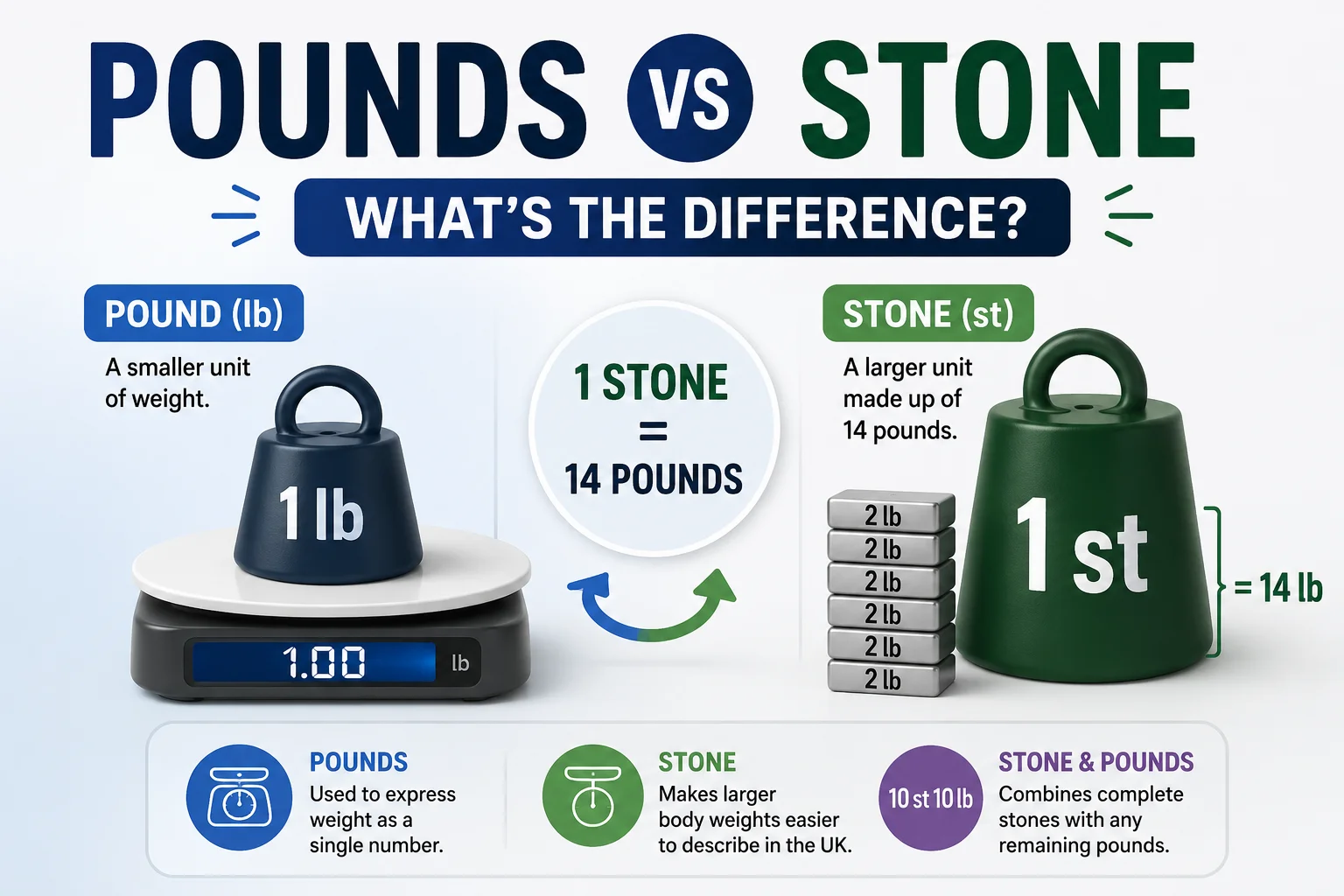
Pounds vs Stone: What’s the Difference?
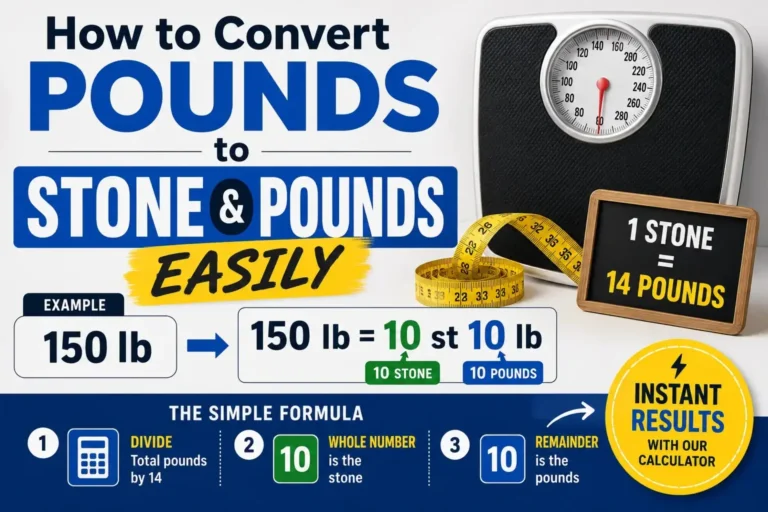
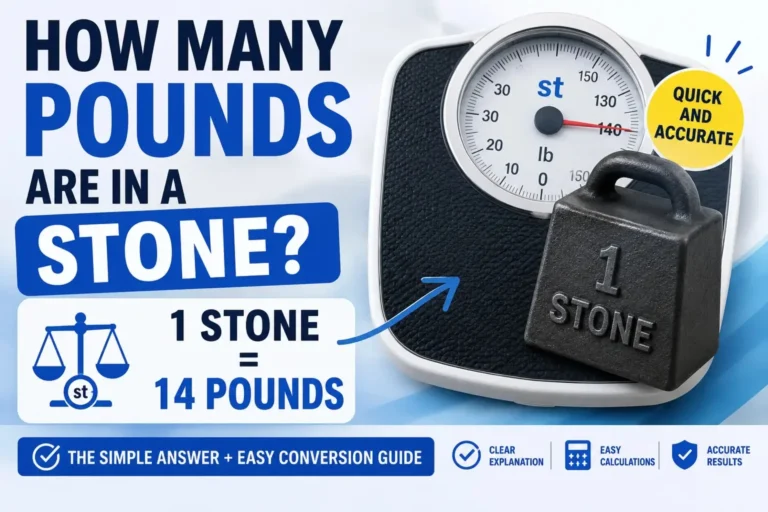
Pounds and stone are both used to describe weight, but they are not the same unit. Pounds (lb) measure weight directly, while 1 stone (st) equals 14 pounds. In the UK, body weight is often given as stone and pounds, although kilograms are also widely used. If you need to compare these measurements, our Pounds to Stone & Pounds Calculator gives you the result quickly without making the comparison confusing.
Pounds vs Stone: The Simple Difference
Pounds and stone measure the same thing—weight—but they use different units. Here is the difference at a glance.
| Measurement | What It Means | Example |
|---|---|---|
| Pounds (lb) | Weight expressed entirely in pounds. | 150 lb |
| Stone (st) | Weight expressed as whole stones. | 10 st |
| Stone & Pounds | Complete stones plus any remaining pounds. | 10 st 10 lb |
Pounds vs Stone Weight Chart
Compare common weights in pounds, UK stone and pounds, and approximate kilograms in one place.
| Pounds | Stone & Pounds | Approx. Kilograms |
|---|---|---|
| 100 lb | 7 st 2 lb | 45.36 kg |
| 120 lb | 8 st 8 lb | 54.43 kg |
| 140 lb | 10 st | 63.50 kg |
| 150 lb | 10 st 10 lb | 68.04 kg |
| 160 lb | 11 st 6 lb | 72.57 kg |
| 180 lb | 12 st 12 lb | 81.65 kg |
| 200 lb | 14 st 4 lb | 90.72 kg |
Why Does Stone Feel Different From Pounds?
Stone and pounds can describe the same weight, but they feel different because a stone represents a larger unit. That makes stone useful for describing body weight in a shorter, more familiar format in the UK.
Pounds Are a Smaller Unit
Pounds are useful when you want to express weight as one number. For example, someone might say they weigh 150 lb. Pounds are also common in situations where smaller weight differences are useful, such as shipping, gym equipment, and product weights.
Stone Gives a Larger Number Unit
Stone groups pounds into a larger unit, so body weights can be described using fewer numbers. Instead of saying 150 pounds, someone in the UK may describe the same weight using a stone-based measurement.
Stone and Pounds Combines Both
Stone and pounds gives a more detailed format by showing the complete stones and the pounds left over. A weight such as 10 st 10 lb is an example of this familiar UK-style format.
The key difference is simply how the weight is expressed: pounds use the smaller unit, stone uses a larger unit, and stone and pounds combines the two.
When Are Pounds and Stone Used?
The best format depends on where the weight is being used. This quick guide shows which measurement is most familiar in common situations.
| Situation | Common Format |
|---|---|
| UK body weight | Stone & pounds |
| UK health information | Stone, pounds and/or kg |
| US body weight | Pounds |
| Gym equipment | Pounds or kg |
| International measurements | Kilograms |
Pounds, Stone and Kilograms
The same weight can be shown in pounds, stone and kilograms. The unit changes, but the actual weight stays the same.
Pounds
Pounds are a smaller traditional weight unit and are commonly used on their own or alongside stone.
Stone
A stone is a larger UK weight unit made up of 14 pounds.
Kilograms
Kilograms are the standard SI metric unit used for weight and mass around the world.
See the units side by side
These are different ways of expressing the same weight. The measurement unit changes, not the amount of weight.
How to Convert Between Pounds, Stone and Kg
Use these quick rules when you only need the conversion direction. For the full pounds-to-stone-and-pounds method, see the detailed guide below.
Convert a pound value into stones using the standard 14-pound relationship.
Convert whole stones into their equivalent pound value.
Useful when comparing UK stone measurements with kilograms.
Converts pounds into an approximate kilogram value.
See the step-by-step guide for converting pounds into UK stone and pounds.
Use Our Pounds to Stone & Pounds Calculator
Enter your weight in pounds and get the UK stone and pounds result instantly, with no manual calculation required.
Enter Your Weight
Enter your weight in pounds (lb) into the calculator.
✓ Pounds inputSee Your Result
The calculator automatically separates your weight into complete stones and remaining pounds.
✓ Automatic resultUse or Copy the Result
Use your converted weight for notes, forms, fitness tracking, or sharing. Copy it if your tool supports the copy result option.
✓ Ready to useConclusion
Pounds and stone are different units used to express weight. One stone equals 14 pounds, so stone represents a larger amount of weight. In the UK, body weight is often written as stone and pounds, such as 10 st 10 lb, while pounds or kilograms may be used in other settings.
If you need to switch between these formats, use our Pounds to Stone & Pounds Calculator for a quick, clear result.
Frequently Asked Questions
Clear answers to common questions about pounds, stone, and UK body-weight measurements.
No. A stone is a larger weight unit equal to 14 pounds.
Stone and pounds remain familiar for describing body weight in the UK, alongside kilograms.
Neither is inherently more accurate. They are simply different units used to express the same weight.
10 stone equals 140 pounds.
Yes. Stone and pounds can be converted to kilograms when you need a metric weight measurement.
One Comment